
Sex, Death, Cars!
Three films meditating on the fear, fetish, and fantasy of cars in cinema.
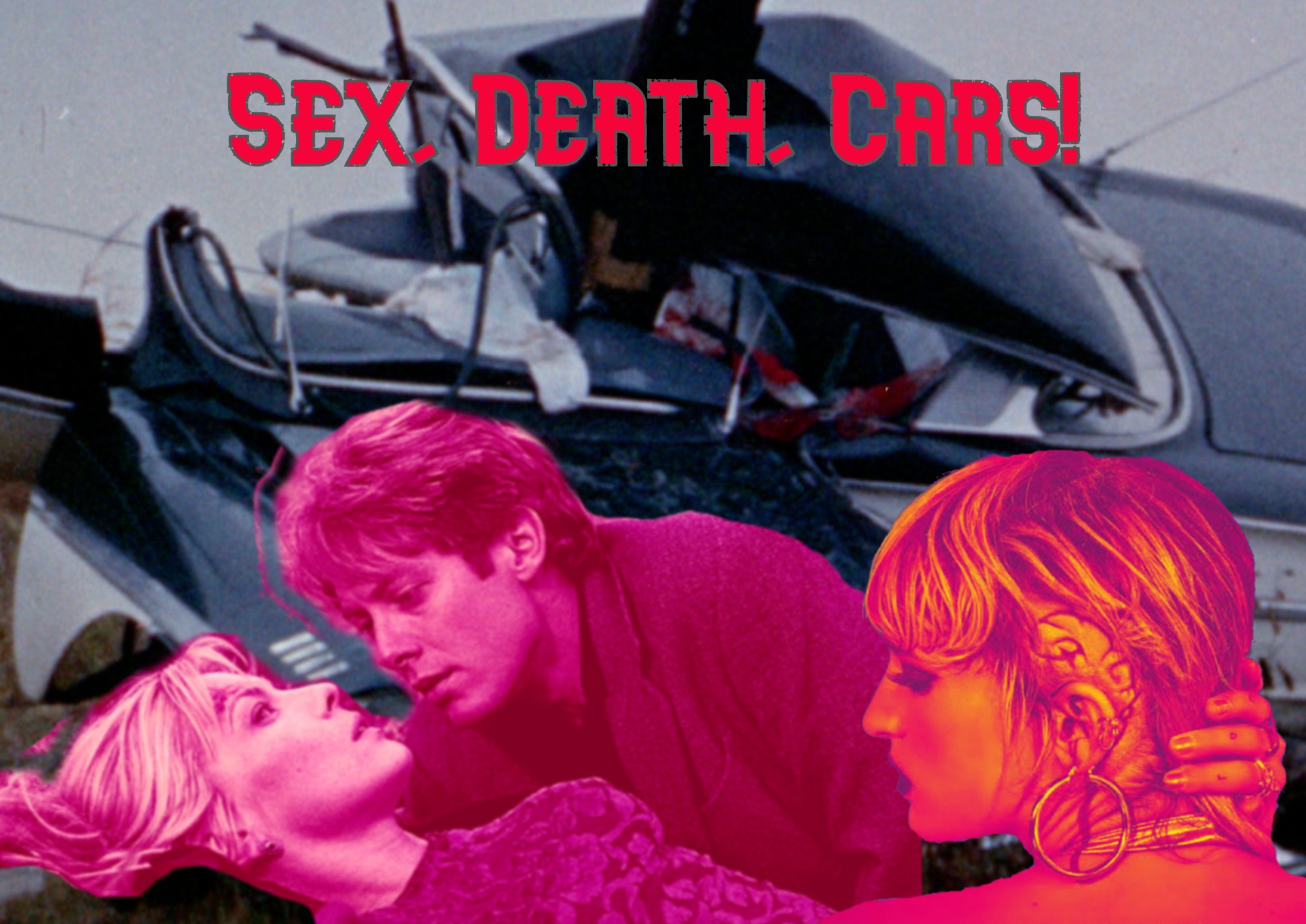
What makes the car such an irresistible cinematic object? From the lurid safety films of the postwar era to the transgressive body horror of more contemporary cinema, the car has long been entangled with on-screen desire, destruction, and the fearful thrill of new technology.
SEX, DEATH, CARS! brings together three such films: David Cronenberg’s Crash (1996), Julia Ducournau’s Titane (2021), and Bret Wood’s newly restored Hell’s Highway: The True Story of Highway Safety Films (2003), together which expound on the car’s strange and scintillating place in moving image history. While Crash sublimates automotive violence into erotic fantasy, Titane pushes that fantasy into the realm of the surreal, where the boundaries between flesh and metal dissolve more entirely. Hell’s Highway, meanwhile, roots this phenomenon in a larger legacy, suggesting that the cinematic eroticization of danger is not simply an aesthetic preoccupation but a material inheritance of the educational-film movement that emerged after the Second World War.
Beginning in the 1950s, unbelievable amounts of filmmaking resources were poured into high-production-value “highway-safety films,” designed to scare teens away from drunk driving—and perhaps, more subliminally, from sex itself. These films transformed the threat of catastrophe into spectacle, depicting outlandish crashes, mangled bodies, and blood-drenched collisions between humans and machines. Hell’s Highway explores this historic phenomenon, in which changing material conditions exacerbated adult anxieties about a newly mobile, less-supervised generation of teenagers and the perceived threat they posed to American family values. The car became a literal mode of auto-mobility, a symbol of freedom, as well as a site onto which fears about sexuality, morality, and mortality could be projected. In the process, these “blood and guts” safety film may have helped pave the road for the fantastically fetishistic car cinema that followed.
Films in the series include:
Crash — David Cronenberg
After getting into a serious car accident, a TV director discovers an underground sub-culture of scarred, omnisexual car-crash victims who use car accidents and the raw sexual energy they produce to try to rejuvenate his sex life with his wife.
Titane — Julia Ducournau
With a titanium plate surgically fused to her skull following a car crash as a child, car model Alexia embarks on a wild and ultimately unpredictable journey that questions our assumptions about family, identity and love.
Hell’s Highway: The True Story of Highway Safety Films (new 2K Restoration) — Bret Wood
Produced between 1959 and 1979 in Mansfield, Ohio, films such as Signal 30 encouraged safety by force-feeding high school kids color footage of careless driving’s dark consequences: blood-stained wreckage, injured bodies, fresh corpses. In the 1970s and ‘80s, these traumatic films disappeared from the American classroom and assumed an almost mythical status. Hell’s Highway unearths these artifacts of grim Americana and interviews the filmmakers responsible for this radical educational movement.
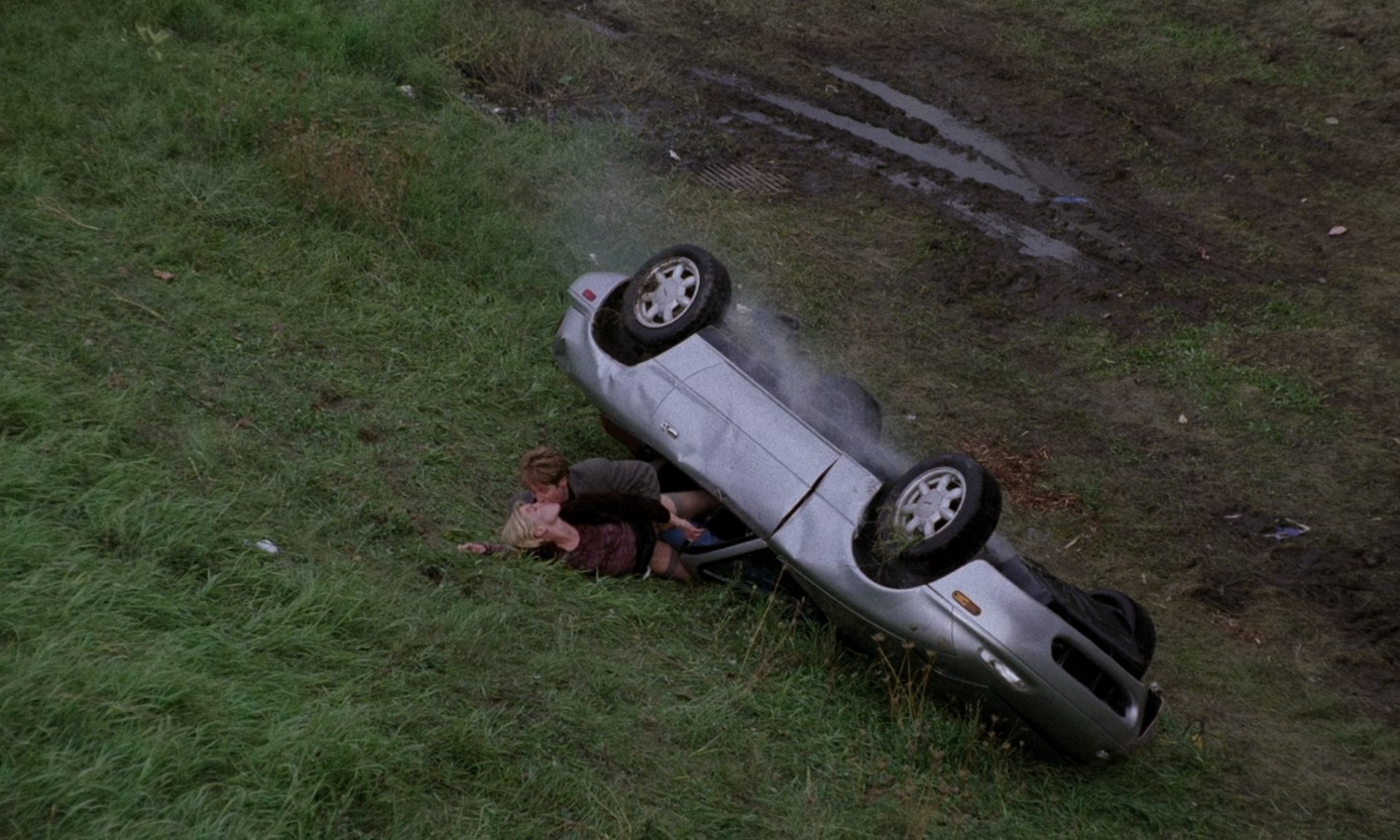
film still from Crash (1996)

film still from Titane (2021)
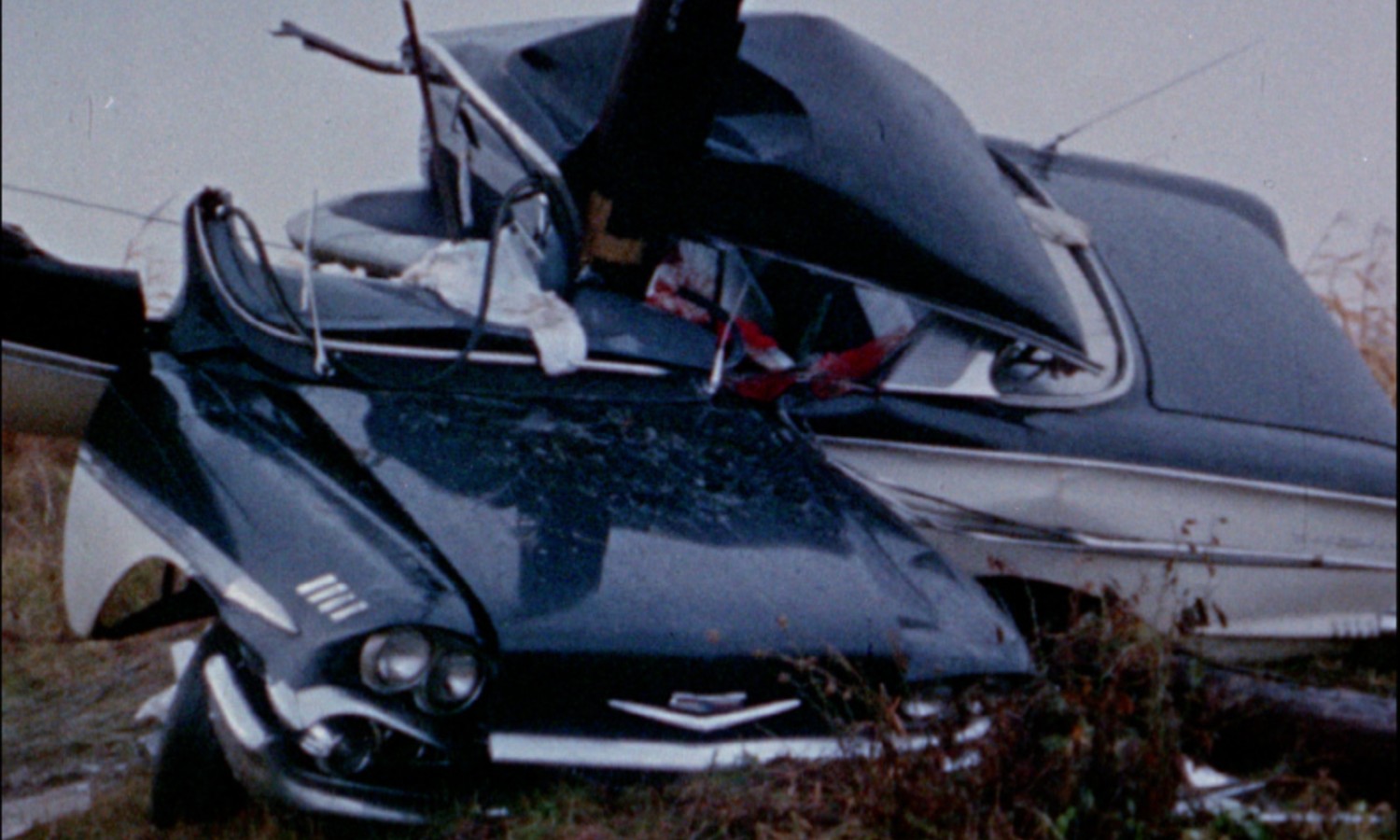
film still from Hell’s Highway: The True Story of Highway Safety Films (2003)
You May Also Like

The Downtown Festival At Roxy Cinema New York
10.01.2026
The Downtown Festival Returns to Roxy Cinema for its third year Oct 9-18, 2026.
Read More
Four by James N. Kienitz Wilkins
09.28.2026
On the occasion of the release of The Misconceived (2026), Roxy Cinema presents four films by filmmaker James N. Kienitz Wilkins.
Read More
Rick Prelinger's Lost Landscapes
09.17.2026
Roxy Cinema welcomes legendary archivist/filmmaker Rick Prelinger to present his participatory city symphony, LOST LANDSCAPES, for two special evenings this September and October.
Read More