Peter Hutton - New York Portraits on 16mm
Experimental | 1972-1990 | 57MIN
Director
Peter Hutton
New York Near Sleep for Saskia (1972, 10MIN)
“Using exciting juxtapositions of shade and movement, this silent and surreally poetic film examines subtle changes of light and landscape in New York. NEW YORK NEAR SLEEP exploits the basic potential of film for capturing light refractions. Hutton imposes on this film the aesthetics of still photography and uses as a structural device the duration of perception of the subtle reflection of movements and illuminations.” – Bill Moritz, Theatre Vanguard
New York Portrait, Chapter I (1978-1979, 16MIN)
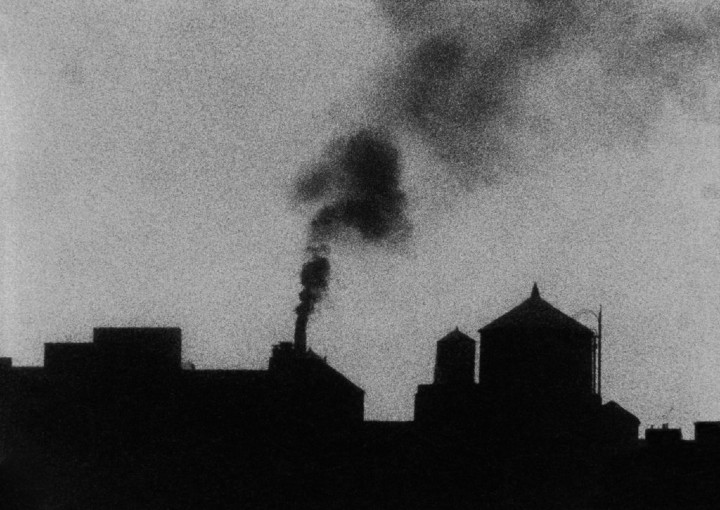
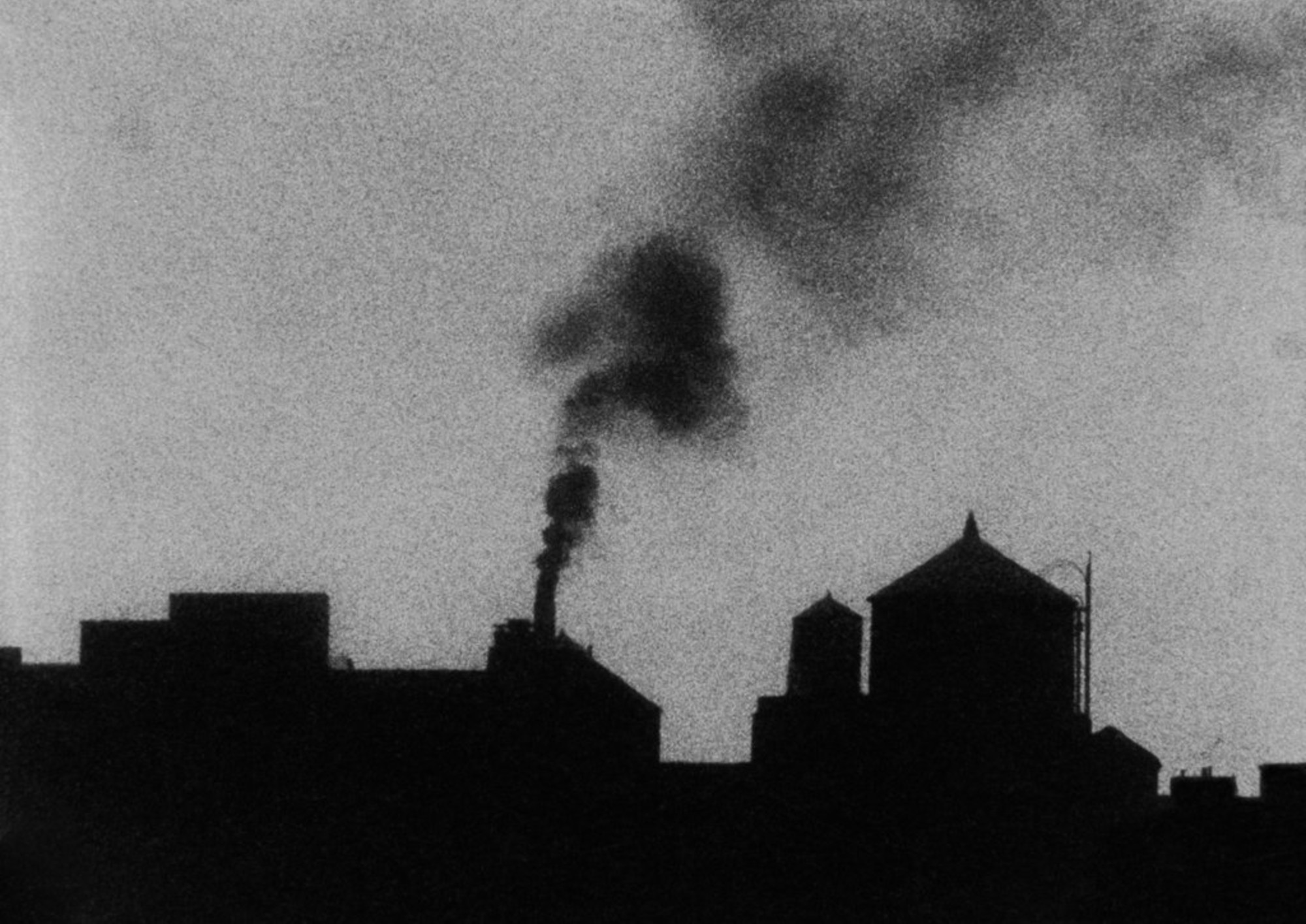
“Hutton’s most impressive work … the filmmaker’s style takes on an assertive edge that marks his maturity. The landscape has a majesty that serves to reflect the meditative interiority of the artist independent of any human presence. … New York is framed in the dark nights of a lonely winter. The pulse of street life finds no role in NEW YORK PORTRAIT; the dense metropolitan population and imposing urban locale disappear before Hutton’s concern for the primal force of a universal presence. With an eye for the ordinary, Hutton can point his camera toward the clouds finding flocks of birds, or turn back to the simple objects around his apartment struggling to elicit a personal intuition from their presence. … Hutton finds a harmonious, if at times melancholy, rapport with the natural elements that retain their grace in spite of the city’s artificial environment. The city becomes a ghost town that the filmmaker transforms into a vehicle reflecting his personal mood. The last shot looks across a Brooklyn beach toward the skyline of Coney Island’s amusement park .? The quiet park evokes the once frantic city smothered by winter. Nature continues its eternal cycles impervious to the presence of man, the aspirations of society, or the decay of the metropolis.” – Millennium Film Journal
New York Portrait, Chapter II (1980-1981, 16MIN)
CHAPTER TWO represents a continuation of daily observations from the environment of Manhattan compiled over a period from 1980-1981. This is the second part of an extended life’s portrait of New York.
“Hutton’s black and white haikus are an exquisite distillation of the cinematic eye. The limitations imposed – no color, no sound, no movement (except from a vehicle not directly propelled by the filmmaker), no direct cuts since the images are born and die in black – ironically entail an ultimate freedom of the imagination. … If pleasure can disturb, Hutton’s ploys emerge in full focus. These materializing then evaporating images don’t ignite, but conjure strains of fleeting panoramas of detached bemusement. More than mere photography, Hutton’s contained-with-in-the-frame juxtapositions are filmic explorations of the benign and the tragic ….” – Warren Sonbert
New York Portrait, Chapter III (1990, 15MIN)
“[Hutton’s] latest urban film, NEW YORK PORTRAIT III, takes on a unique tone in relation to Hutton’s ongoing exploration of rural landscape. The very fact that Hutton is dealing with older footage, with archives of memory more than immediacy, gives it a different texture than his earlier New York films, in spite of many continuities with them. Hutton always found the presence of nature in the city, not only in his many shots of sky and vegetation, but also in the geometry and texture of the city itself, which seemed to project an independence from the human. This film seems to bathe itself in a nostalgia for things human, as if Hutton were looking at a vanishing race. Again humor rather than lamentation prevails, but never has it seemed that people were so contingent in Hutton’s films. The high angle of observation, frequent in Hutton’s previous New York films (and an invocation of their diaristic observer quality), here seems to carry a sense of withdrawal, a distance matched by compassion. … The final image in which a small shape against the scale of skyscraper and sky suddenly reveals itself as human by its motion seems emblematic, as does Hutton’s observations of the accidents and rescue of people below on the street.” – Tom Gunning
Peter Hutton was born in Detroit on August 24, 1944 to Donald Hutton and Dorothy Plunkett Hutton. His mother was an amateur painter, and his father, a former merchant seaman, was the founder of a small film society. Peter grew up looking at photo albums from his father’s travels, fascinated by images of far-flung locales and vast seascapes. At eighteen, his father advised him to enlist, and Peter began his life at sea as a merchant marine in Honolulu, alternating between working on saltwater ships and attending art school for painting at the University of Hawaii. There he studied under primarily Japanese and Chinese teachers, who gave him an appreciation for the Eastern approach to art, which would inform his contemplative approach to filmmaking. Peter then moved to San Francisco, where he attended the San Francisco Art Institute, initially for sculpture, then performance art. He ventured into filmmaking by chance, while documenting a performance he’d organized, later telling the blog Cinemad, “When I got the film back, I was struck by how beautiful the film record of the event was, in terms of its graphic quality. And I thought, ‘Maybe I can just film things and not worry about creating events.’ From that moment, I started making films.” He went on to receive his master’s degree in filmmaking from the San Francisco Art Institute in 1971.
Upcoming Shows